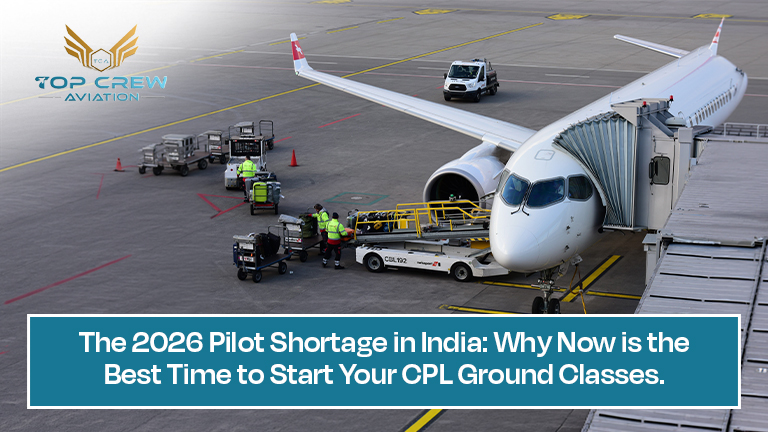
Aviation careers to 2026.
The aviation industry in India is growing at a rapid pace, and there is immense demand for trained personnel in both commercial and regional aviation. The industry is in for thousands of new pilots in the coming few years, as aircraft fleets grow and airlines expand routes, domestically and internationally. Pupils who are interested in a career in aviation are therefore taking a greater interest in well-structured training and career paths. Many students who are interested in becoming pilots are now taking CPL ground courses and flight training courses at an earlier age in order to meet both the technical standards for pilots’ licences and the expectations of the airlines for competitive recruitment.
Certain questions about CPL ground classes are answered in this section: What, why, and when.
Technical knowledge is a holistic requirement of professional aviation careers, well before students get their hands on an aircraft. Hence, CPL ground classes are one of the most crucial periods in a pilot’s training. In-ground training, students are introduced to navigation, meteorology, aircraft systems, aviation law and procedures that provide the theoretical foundation for aviation training.
Practical flying time is often used to reinforce structured pilot ground classes where students are instructed on concepts in flight. They don’t have to deal with all the jargon at a later stage; instead, they come to flight training with a level of familiarity and confidence. This preparation can help to enhance students’ academic abilities and enable them to adjust to aviation environments in a more efficient way.
Consistency is yet another critical benefit of early CPL ground classes. To embrace the discipline and logic in preparing for aviation studies, along with consistent habits of learning. If students develop these habits in ground school, the transition to flight instruction and examination may prove to be easier in the future.
The constantly expanding aviation industry in India is still presenting job opportunities for trained professionals. These are expected to generate sustained demand for pilots in the region due to airline expansion, rising passenger traffic and better regional connectivity. Airlines are expected to keep on ordering new planes, and so would the requirement for qualified aviation professionals.
The evolving industry landscape is driving greater interest in formal flight school training prior to starting advanced flight licensing courses. Students now realise that in preparation, they are not just preparing for flight hours. Technical aptitude, communication skills, professionalism and decision-making are among the other factors airlines will assess during the recruitment process.
Pilot ground classes are well structured to give a solid foundation for students before they go to simulator sessions and practical flying. There is always a need for concentration and regular updating for subjects like air navigation and aviation meteorology. When students realise this, those who prepare well do well in subsequent aviation tests.

A lot of young pilots make the mistake of not understanding the importance of timing in career planning for a career in the aviation industry. Having CPL ground courses start at an appropriate time can help students earn their license without an undue delay or over-taking unnecessary procedures in training. Preparation also allows students to know what medical requirements they will need, what the structure of the exams is and what procedures are involved in aviation before making larger financial commitments.
The main objective of professional pilot training programs is to build up both technical and personal skills. Aviation professionals must remain calm and collected when under stress, and communicate efficiently with others, as well as carefully follow operational procedures. Pre-Cockpit training at Ground School enhances discipline, teamwork, and professional awareness.
A student who passes through a good ground class for a pilot is better equipped for inclusion in an interview session or aptitude test, as they are already familiar with aviation terms and working in the aviation industry. Systematic training can instil greater confidence and enhance career readiness in the field of aviation.
Industry readiness is crucial for their success in their chosen field. They must know the importance of being industry-ready.
Last year, the future of pilots was uncertain due to the anticipated shortage in 2026, which has prompted students to start preparing sooner than in previous years. Employer airline preferences are showing a shift towards technically literate, disciplined, goal-oriented technical school students. Lack of preparation could mean that students will then have to compete with candidates who have a more solid foundation of theory and a better understanding of aviation.
Aviation education is a systematic process, and joining organised pilot training programs could be a great way to help an aspiring flight school student prepare systematically at each step of the aviation education process. Structured preparation enables students to feel more confident and have realistic expectations for training, from medical awareness to licensing examinations. When you plan carefully, things will go more smoothly in your journey to the air.
Today’s students entering aviation are much more focused on organised timelines and more realistic planning for their careers. To train, patience, financial preparations, and academic concentration are necessary throughout the training process. Students who grasp the order of medical clearance, examination and aviation technical studies often exhibit greater clarity and confidence in aviation education in future career development experiences.
Top Crew Aviation encourages and nurtures young pilots by providing clear guidance, expert mentorship, and industry-specific training. The institution assists students in their responsible preparation in aviation career and cultivates their confidence and discipline and introduces them to the expectations of aviation training.
The CPL ground classes consist of theoretical training in aircraft systems, regulations, navigation and meteorology prior to the student starting practical flight and preparing for airline flying licenses.
Intensive ground training with basic technical concepts introduces students to the world of flying a plane, builds confidence and readiness for simulator sessions, exams and recruitment assessments with the airlines.
Pilot training courses are organised to build up the technical knowledge, communication skills, discipline and aviation awareness needed to successfully work one's way up the professional aviation learning pathway.
Top Crew Aviation is designed to offer a structured mentoring program, industry-specific guidance, and professional learning assistance to aspiring students seeking to embark on a successful career path in aviation.
Batch Start From 6th Jan & 10th Jan 2025
Batch Start From 10th Jan 2025