Understanding Air Regulations: A Comprehensive Guide to India’s Latest Aircraft Rules
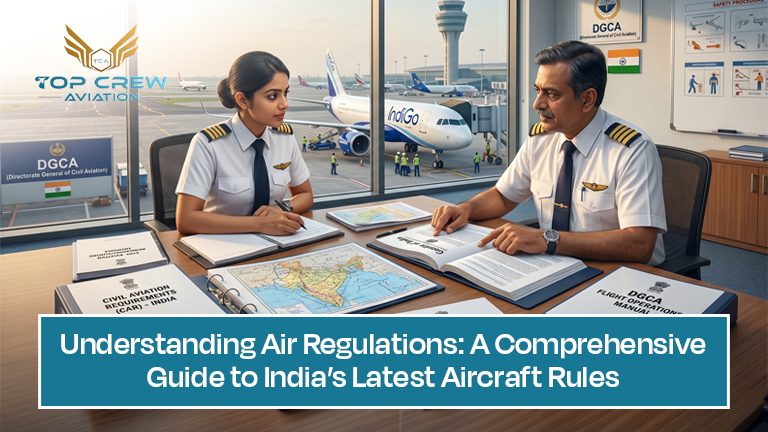
India’s aviation industry is constantly evolving with new regulations for aircraft, which are established for safety measures to ensure the growth of airline activities. The rules are updated on a regular basis by the aviation authorities to promote the safety, liability, operations and training quality of the aviation industry. Thus, students investigating careers in aviation are more focused on regulatory considerations when planning for aviation. In fact, many of the aspiring professionals who are doing lots of research for a pilot training institute before taking up aviation training, also take a look at the reputation of the top 10 pilot training institutes in India before considering the pilot training fees in India.
Understand the importance of Air Regulations within the setting of aviation training.
The legal and operational bases of aviation activities are air regulations. Aviation laws set by regulatory authorities are followed by every airline, aviation organisation, instructor and pilot. These regulations establish “rules of operation” for aircraft licenses, flight procedures, aircraft maintenance, standards for pilots’ medical fitness and pilot responsibilities.
In a pilot training institute, students are exposed to aviation regulations at an early stage, as accuracy in flying and adhering to the rules is essential for a pilot’s work. Learning the rules of flight will help students learn at an advanced level of flight training by developing professional discipline and awareness before starting flight training.
New regulations for 2026 continue to emphasise safety management systems, digital documentation, procedures for monitoring work by pilots, and training accountability. These adjustments are made in the wake of the ever-evolving nature of aviation, with passenger numbers and aircraft fleets on the rise in India.
The Ability to Comprehend the Effects of Regulatory Adjustments
The modern regulations in aviation have an impact on all aspects of pilot training and aviation services. In the era of exploring the top 10 pilot training institutes in India with fees now, the students consider the standards of the training because compliance is directly impacting the quality of aviation.
New aircraft rules also support the development and maintenance of documentation systems by the training organisations, structured theoretical instruction and procedures for simulators. More and more, aviation authorities are looking for students to show technical understanding and operational awareness before they move into the licensing process.
This rise in focus on aviation compliance has spurred more debates on pilot training fees in India as students realise the need for structured facilities, knowledgeable trainers, and streamlined processes in quality training. Although students are encouraged to consider financial factors when researching admissions, the quality of their training and regulatory compliance is also a major factor.
It is the role of the regulation to ensure that the professional development of teachers is guided.
Aviation rules do not only contain technical operations. They also influence behaviour, communication standards, emergency procedures and decision-making in aviation-related situations. Aviation procedures are designed to ensure safety and efficiency in aviation operations, and students in a professional pilot training institute learn about them.
New procedures and training consistency requirements are also included in updated regulations for 2026. Aviation students taking courses to acquire an aviation career must know how aviation regulatory systems impact the coursework of licensing exams, flight training, simulator training, and aviation documentation throughout their course of study.